

Blog

Dr Christopher Ng
Consultant Obstetrician & Gynaecologist
MBBS (Imperial College, UK), MMed (O&G) (Singapore), FRANZCOG (Aust-NZ), FAMS (O&G) (Singapore)
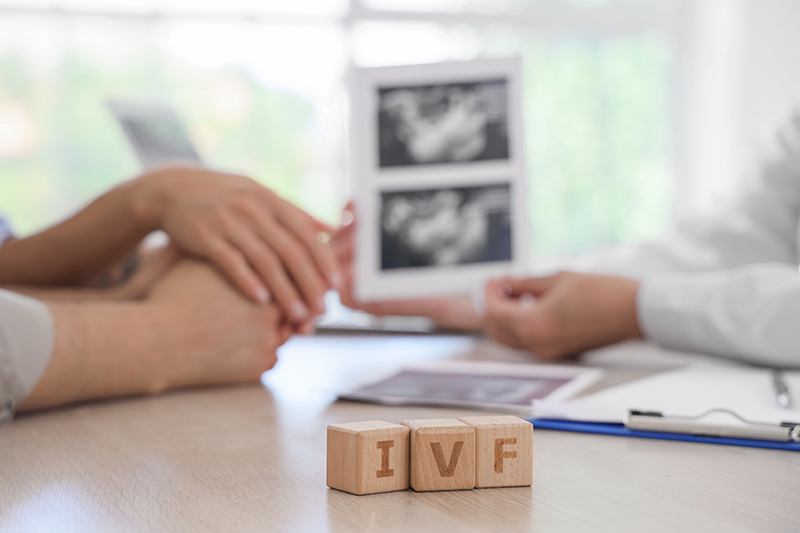
In-vitro fertilisation (IVF) is an assisted reproductive treatment that involves retrieving eggs, fertilising them with sperm in a laboratory and transferring a selected embryo into the uterus. Fertility specialists use this as an established treatment option for individuals and couples facing fertility challenges, including those who have been trying to conceive without success.
Deciding whether to undergo IVF can feel like a significant step in your family planning journey, especially if you are unfamiliar with what the treatment involves. To better understand the process, and to help yourself feel more prepared, it is important to understand how IVF progresses, from consultation and ovarian stimulation to egg retrieval and fertilisation.
IVF may be recommended when conception has not occurred despite trying naturally or when there are underlying factors that reduce the likelihood of pregnancy without assisted reproductive treatment.
Some common examples are:
If you experience any of these fertility challenges, speaking with a fertility specialist is the best way to determine whether IVF is suitable for your individual circumstances.
The IVF process begins with a comprehensive consultation and fertility assessment when IVF is considered an appropriate treatment option. This appointment allows your fertility specialist to evaluate your reproductive health, determine whether IVF is suitable for your individual circumstances and plan out your treatment approach.
During the consultation, your medical history, previous pregnancies, menstrual history and any prior fertility treatments will be reviewed. You may also be advised to undergo blood tests to check your hormone levels, an ultrasound scan to assess your ovaries and uterus and, where appropriate, a semen analysis for your partner. These tests provide a clearer picture of your fertility and help guide your treatment plan.
Once the results have been reviewed, your fertility specialist will explain the IVF procedure, discuss the expected treatment timeline and prepare you for the next stage of treatment: ovarian stimulation.
To begin the IVF procedure, your fertility specialist will prescribe fertility medications that encourage your ovaries to produce and mature multiple eggs during a single menstrual cycle. Unlike a natural cycle, where only one egg typically matures, stimulating the ovaries increases the number of eggs available for retrieval and fertilisation, improving the chances of developing healthy embryos.
Throughout this stage, your fertility specialist will closely monitor your response using ultrasound scans and blood tests. These appointments allow your medication dosage to be adjusted if necessary and help determine when your eggs have reached the right stage of maturity.
Once the eggs are ready, your fertility specialist will advise you to take a trigger injection, which completes the final stage of egg maturation and prepares the eggs for retrieval. The egg retrieval procedure is then scheduled approximately 34–36 hours later.
On the day of the procedure, your fertility specialist will perform egg retrieval under sedation to keep you comfortable throughout the process. Using ultrasound guidance, a fine needle is carefully passed through the vaginal wall to collect the mature eggs from each ovarian follicle.
The procedure usually takes around 20–30 minutes. After a short recovery period, most patients can return home on the same day. Once the eggs have been collected, they are immediately transferred to the laboratory so embryologists can assess their maturity and prepare them for fertilisation.
In the laboratory, embryologists fertilise the mature eggs using either conventional IVF or intracytoplasmic sperm injection (ICSI), depending on your fertility specialist's recommendation and your individual treatment needs.
Over the next few days, the developing embryos are carefully monitored for normal cell division, growth and overall quality. Based on these observations, the embryology team identifies the embryo or embryos with the best developmental characteristics, allowing your fertility specialist to select the most suitable embryo for transfer in the next stage of the IVF procedure.
Once the healthiest embryo has been selected, your fertility specialist will prepare you for embryo transfer by confirming that your uterine lining is suited to support implantation. If your doctor determines that the uterus is ready, the embryo transfer will be carried out.
During the procedure, your fertility specialist will gently place the selected embryo into your uterus using a thin, flexible catheter guided by ultrasound. The procedure is usually completed within a few minutes and does not require general anaesthesia.
Following the embryo transfer, you may be prescribed hormonal medication, such as progesterone, to help support the uterine lining during the early stages of implantation. Your fertility specialist will also provide guidance on medications, activity levels and any symptoms to monitor while you recover at home.
Approximately two weeks after the embryo transfer, your fertility specialist will arrange a blood test to determine whether implantation has been successful and pregnancy has occurred. This allows enough time for pregnancy hormone (hCG) levels to become detectable and provides a more accurate result than testing too early.
If the test is positive, your fertility specialist will arrange an early pregnancy ultrasound to confirm the pregnancy and monitor its progress. If pregnancy has not been achieved, your fertility specialist will review your treatment cycle with you, discuss any factors that may have influenced the outcome and recommend appropriate next steps, which may include another IVF cycle or alternative fertility treatment options.

Although the IVF procedure typically follows this structured series of stages, every treatment plan is tailored to your individual fertility needs and treatment goals. Throughout the process, your fertility specialist will closely monitor your progress, make adjustments where necessary and guide you through each stage of treatment.
If you are considering IVF or have been experiencing difficulty conceiving, GynaeMD Women’s & Rejuvenation Clinic may be able to assist. Under the care of Dr Christopher Ng, our consultant obstetrician & gynaecologist, we provide comprehensive fertility assessments, personalised IVF treatment plans and ongoing support throughout every stage of your fertility journey.
Contact us today to arrange a consultation and discuss the treatment options available to you.
Dr Christopher Ng
Consultant Obstetrician & Gynaecologist
Qualifications & Credentials
Dr Christopher Ng is a consultant obstetrician and gynaecologist with over three decades of experience in women's reproductive health. Having received medical education and training in Singapore, the UK and the US, his clinical experience includes fertility assessment and treatment, as well as laparoscopic surgery for gynaecological conditions that may affect fertility.
At GynaeMD Women's & Rejuvenation Clinic, Dr Ng provides personalised fertility care, including IVF and SO-IUI treatments. He takes a considered approach to helping individuals and couples understand their reproductive health, explore suitable treatment options and make informed decisions about their fertility journey.


